Choosing a Professional Quality Power Tool is not simply about paying more for a recognizable brand. It is about controlling performance, safety, durability, and long-term operating costs. In a busy workshop, a dependable drill should start smoothly, hold its torque, and remain comfortable after hours of use. Small details matter. A balanced grip matters.
Mike Rowe, a respected advocate for skilled trades, once said, “Safety is not expensive, it’s priceless.” That principle applies directly to power tools. Professional equipment often includes stronger housings, better heat management, reliable braking systems, and clearer safety controls. These features cannot replace proper training. They can, however, reduce avoidable mistakes during demanding work.
Real professionals also examine service support, battery compatibility, warranty terms, and replacement parts. A powerful motor alone proves very little. The tool must perform consistently under dust, vibration, repeated loading, and changing job conditions. Independent testing and recognized safety certifications offer useful evidence, although specifications never tell the whole story.
No tool is perfect. Even an expensive model can feel heavy or fail when poorly maintained. I have seen users choose maximum power when better balance would have improved the result. That is an easy mistake. The best Professional Quality Power Tool matches the task, the operator, and the working environment. Its value appears over time, through cleaner cuts, fewer interruptions, safer handling, and more predictable results. Reliability is less dramatic than raw power, but it is usually what professionals remember.
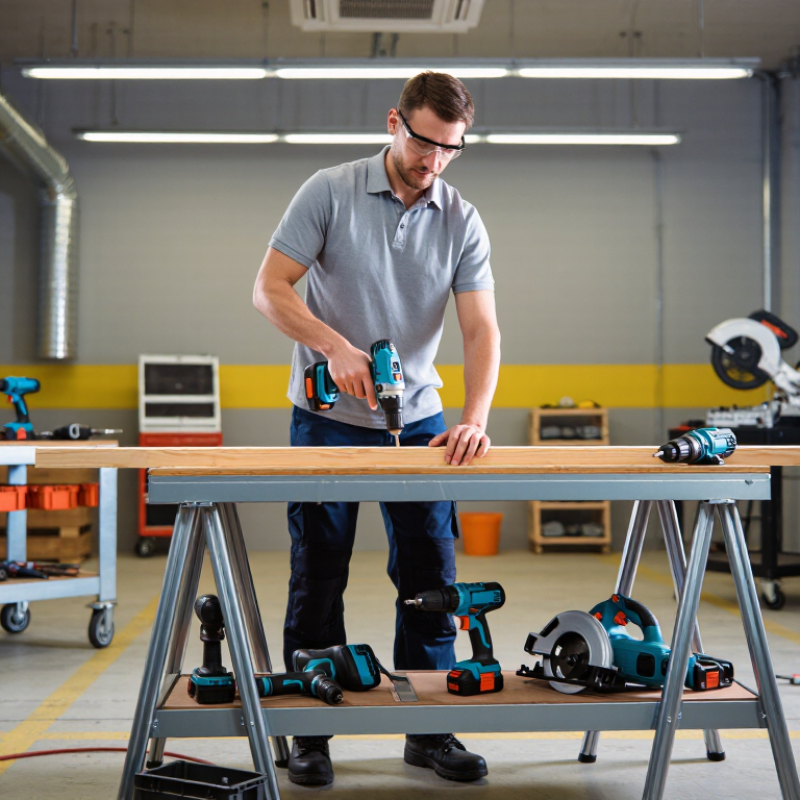
Professional-grade is not a universal legal label. It usually describes durability, controlled performance, serviceability, and safety engineering. IEC 62841-1:2014 sets general safety requirements for hand-held and transportable motor-operated tools. Its particular parts address tool-specific risks and test conditions. IEC 62841 is a safety standard, not a promise of maximum power.
Ratings need careful reading. Voltage identifies the electrical system, while torque reflects turning force under specified conditions. No-load speed shows rotation without resistance, not real cutting speed. Duty-cycle information reveals how long a tool can work safely. Sound power and vibration ratings matter near a worker’s hands and ears. Small numbers can matter greatly.
Industry data supports this caution. The ILO estimated 2.93 million work-related deaths worldwide in 2019, including incidents linked to hazardous working conditions. The U.S. Bureau of Labor Statistics recorded 2.6 million nonfatal private-industry injuries and illnesses in 2023. These figures are not tool-specific, but they highlight why risk controls deserve attention. In workshop evaluations, a balanced tool often feels more professional than a faster one. A higher rating can still disappoint. I would question unclear test conditions, incomplete vibration data, and impressive specifications without independent verification.
It usually means durable construction, controlled performance, serviceability, and stronger safety engineering. It is not a universal legal label. I would question vague claims without test details.
No. IEC 62841 mainly addresses safety requirements for hand-held and transportable motor-operated tools. Its specific sections cover different tool risks and testing conditions. Safety comes first.
Check voltage, torque, RPM, runtime, duty cycle, sound power, and vibration. Voltage identifies the electrical system. Torque shows turning force under stated conditions. Small numbers matter.
Peak torque can look impressive but may not continue under heavy load. Watch whether the tool slows when driving long screws into dense timber. Sustained torque matters more during real work. Brochure numbers can mislead.
No-load RPM shows rotation without resistance, not actual cutting speed. High RPM suits thin metal and clean drilling. Lower speeds can reduce heat during larger holes. Maximum speed is rarely ideal.
Battery capacity, material resistance, bit condition, and operator pressure all affect runtime. Excessive pressure drains power faster. I have made that mistake myself. The lesson is useful, not perfect.
It shows how long a tool can operate before cooling becomes necessary. A 30-minute rating may describe intermittent use, not continuous operation. Check load, temperature, and testing conditions. Heat tells the truth.
Include purchase price, consumables, repairs, calibration, lost labor, and downtime. A failed $250 tool can cost more through two yearly breakdowns. Three lost labor hours per incident add up quickly. The estimate may still be imperfect.
One failure can stop a technician, delay installation, and leave materials unfinished. Reliable tools reduce interruptions and repeated adjustments. Predictive maintenance may lower costs compared with emergency repairs. My calculation deserves review.
Professional Quality Power Tool products are designed to deliver dependable performance, safer operation, and long-term value in demanding work environments. Unlike basic tools, professional-grade models are evaluated through clear definitions, rating systems, and applicable IEC 62841 standards. Their safety features support responsible workplace practices aligned with OSHA 29 CFR 1910.242(a) and 1910.243(a), while performance metrics such as torque, RPM, battery runtime, and duty-cycle ratings help users select the right tool for each task.
Durability is also a key advantage. IP-code protection, UL 60745 evaluation, and ISO 12100-based risk considerations can help assess resistance to dust, moisture, mechanical stress, and operational hazards. Although the initial purchase price may be higher, a reliable tool can reduce downtime, repair frequency, replacement costs, and productivity losses. By comparing total cost of ownership rather than focusing only on price, users can achieve a stronger return on investment and maintain consistent results over time.

 BD Medical